2026-10-14
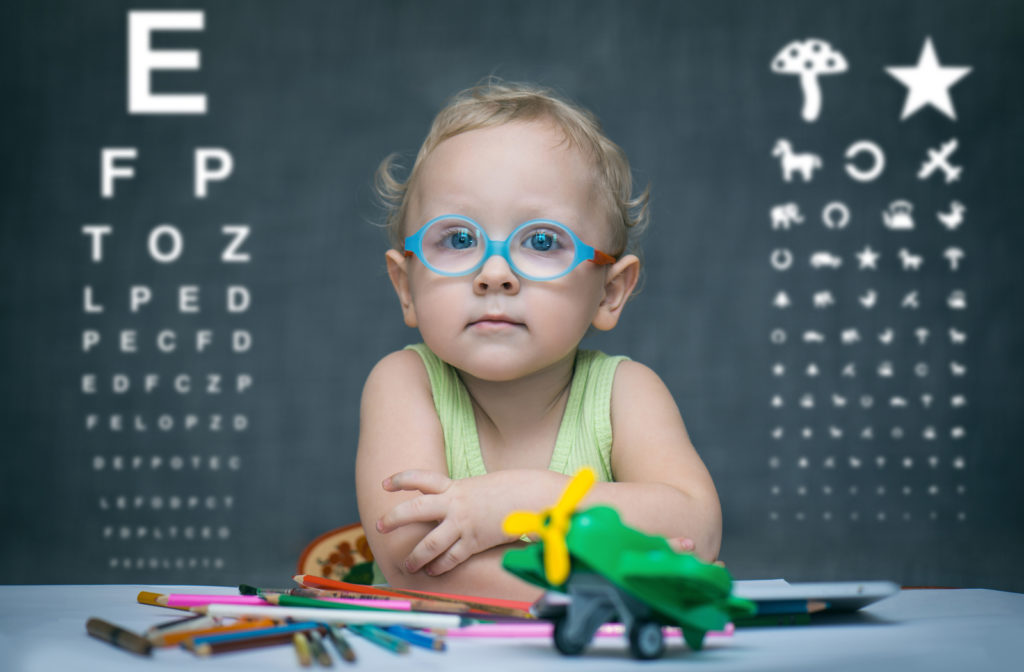
Most people who get tired eyes or a headache after twenty minutes of reading assume they need new glasses. Often they do not. The prescription can be perfect and the eyes can still struggle with the three jobs glasses cannot do for them: aiming both eyes at the same word, holding focus steady, and jumping accurately along a line of print. That is what vision therapy trains, and as of this month we run home-based vision therapy programs from our store in Okotoks.
What vision therapy is, in plain words
Vision therapy is a set of short daily eye exercises, done at home, that train how the two eyes work together. Think of it as coaching for the visual system, the way physiotherapy is coaching for a knee. The exercises are simple: a bead on a string, a pencil moving toward your nose, a chart on the wall, a pair of lens flippers, and moving targets on your phone. Done a few minutes a day for a few weeks, the eyes learn to aim, focus and move with less effort.
Who it is for
The signs are familiar to a lot of students and screen workers:
- Eyes that feel tired, sore or strained with reading or screens
- Headaches with homework, reading or close work
- Words that move, jump, blur in and out, or go double
- Losing your place, skipping lines, re-reading the same line
- Reading slowly or avoiding reading altogether, which is common in kids
- After a concussion: screens and busy places feel worse, and focusing from near to far is hard
Children from about age six can do the programs with a parent running the phone. Children under six should see an optometrist for a developmental assessment first.
How our program works
- Eye test first. Blur has to be ruled out before anything else. If your glasses are more than two years old, book a free eye test. Eye tests are free for children under 19 and adults 65 and over.
- A five-minute screening. Fifteen questions about reading and close work, plus a short history, on our Vision Therapy page. We score it with age-based cut-offs and it suggests which type of program fits. It is a screening, not a diagnosis.
- Measurements in store. Our team checks the numbers behind the symptoms: how close your eyes can hold a target together, how much they can converge and diverge, and how quickly they refocus.
- Your program on your phone. One link, no app. Each day's exercises run with timers, moving targets and counters, a weekly progress bar and a stop rule. About 9 to 18 minutes a day, 5 days a week, for 6 to 12 weeks, with a short symptom check-in every week.
- A re-check at the end. We measure again and decide together: close the program, extend it, or refer you to an optometrist or physician if something needs more than exercises.
Four kinds of program
Eye teaming (convergence) is the most common pattern: eyes that struggle to aim together up close. Focusing is for focus that will not hold or is slow to change. Tracking is for losing your place and slow reading. Post-concussion vision is a gentle, seated, symptom-limited program for screen and reading symptoms after a concussion; if a physician or optometrist is following your concussion, we keep them in the loop.
What it is not
Vision therapy is for the skills of seeing. It does not treat eye disease and it is not a substitute for medical care. Sudden double vision, a headache that is the worst of your life, any loss of vision, or flashes and a shower of floaters need a doctor first, not exercises. Our opticians will tell you plainly when that is the case.
Start with the screening
The screening is free and takes about five minutes on your phone. Open the Vision Therapy page, press Start my 5-minute screening, and we will look at your answers and be in touch about the next step. Questions? Call us at (587) 997-3937 or drop into the store at Unit 401, 235 Milligan Dr, Okotoks.