Vision Therapy

Home exercise programs for eye teaming, focusing, tracking and post-concussion vision — run from your phone, checked weekly by our team in Okotoks.

What Is Vision Therapy?

Glasses fix blur. They cannot fix how your two eyes work together. Reading a page needs three skills on top of a sharp picture: both eyes aimed at the same word (eye teaming, or convergence), focus held steady for minutes at a time (accommodation), and accurate jumps along the line (tracking). When one of those is weak, the words blur in and out, double, swim, or you keep losing your place — even with a perfect prescription.

Vision therapy trains those skills with short, repeated exercises: a bead on a string, a pencil moving toward your nose, charts on the wall, lens flippers, moving targets on a screen. Done a few minutes a day for a few weeks, the eyes learn to aim, focus and move with less effort.

Signs It May Help

  • Eyes feel tired, sore or strained when reading or on screens
  • Headaches with homework, reading or close work
  • Words move, jump, blur in and out, or go double
  • Losing your place, skipping lines, re-reading the same line
  • Reading slowly or avoiding reading altogether (common in kids)
  • After a concussion: screens and busy places feel worse, trouble focusing near to far
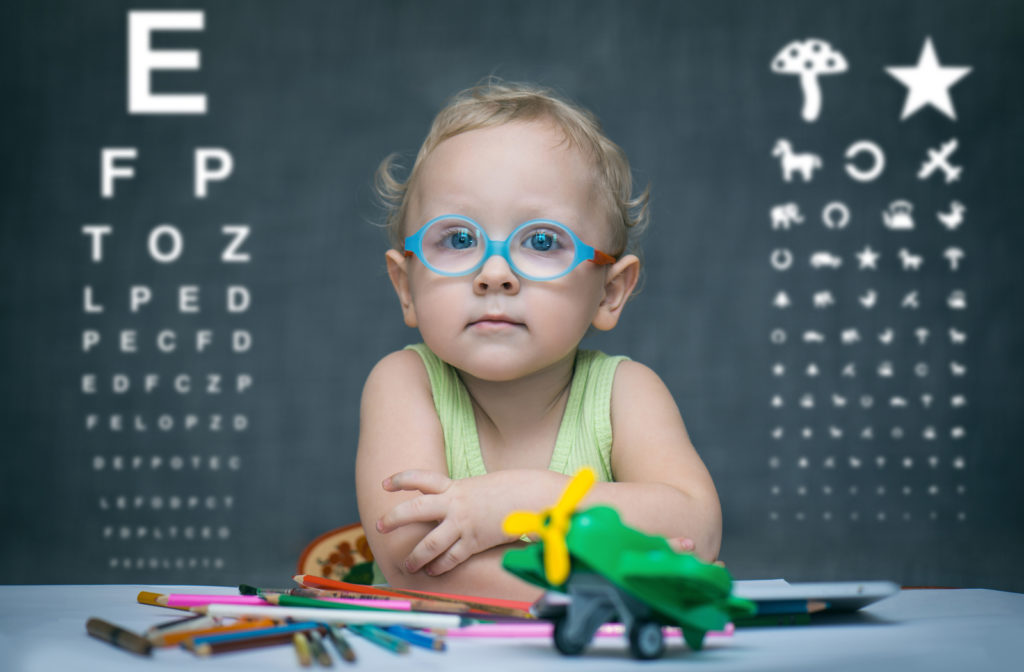
Child wearing glasses — vision therapy screening at Fantastic Glasses in Okotoks

How It Works at Fantastic Glasses

From a 5-minute questionnaire to a program on your phone

Eye test first

Blur has to be ruled out before anything else. If your glasses are more than two years old, book a free eye test (free for under 19 and 65+). Up to date? Skip to the screening.

Take the screening

Fifteen questions about how your eyes feel with reading, plus a short history. We score it with age-based cut-offs and it suggests which program type fits. It takes about 5 minutes and it is not a diagnosis.

We measure in store

Our team checks the numbers behind the symptoms: how close your eyes can hold a target together, how much they can converge and diverge, and how quickly they refocus through lens flippers.

Your program on your phone

One link, no app. Each day's exercises with timers, moving targets and counters, a weekly progress bar and a stop rule. About 9 to 18 minutes a day, 5 days a week, for 6 to 12 weeks.

Kit and weekly check-ins

We hand you the kit your exercises need (Brock string, red-green glasses, flippers, printed charts). A short symptom check-in each week shows whether things are moving.

Re-check at the end

We measure again and decide together: close the program, extend it, or refer you to an optometrist or physician if something needs more than exercises.

Program Types

The screening points to one of these; our team confirms it with measurements

Eye Teaming (Convergence)

For eyes that struggle to aim together up close: strain, headaches, words moving or doubling with reading. Brock string, pencil push-ups, red-green targets and barrel cards.

Typical: 12 weeks, about 18 minutes a day.

Focusing (Accommodation)

For focus that will not hold or is slow to change: print blurring in and out, slow to clear after looking up from a page or screen. Near-far charts, lens flippers, push-ups.

Typical: 8 weeks, about 11 minutes a day.

Tracking

For losing your place, skipping words and slow reading. Chart jumps, saccade drills, smooth-pursuit targets and letter tracking on the phone.

Typical: 8 weeks, about 12 minutes a day.

Post-Concussion Vision

A gentle, seated, symptom-limited program for screen and reading symptoms after a concussion. Short doses, a strict stop rule, and a weekly check-in. We keep your physician or optometrist in the loop if one is following you.

Typical: 6 weeks, about 9 minutes a day.

Vision Therapy Screening

Five minutes. Fifteen questions about reading and close work, plus a short history. We review every answer; nothing here is a diagnosis.

Start my 5-minute screening

It opens in a window right here. Filling it in for a child? Use the child's name and date of birth with your own phone or email. Prefer a full page? Open it in a new tab.

What Vision Therapy Is Not

Vision therapy is for the skills of seeing. It does not treat eye disease, and it is not a substitute for medical care. Our opticians run the screening, the measurements and the home program, and will tell you plainly when you need an optometrist or physician instead.

See a doctor first if you have

  • Sudden double vision, or double vision that is new and constant
  • A headache that is the worst of your life, wakes you, or comes with vomiting
  • Any loss of vision, a new blind spot, or flashes and a shower of floaters
  • A concussion in the last two weeks that is still being assessed

Children under 6 should see an optometrist for a developmental assessment before any home program.

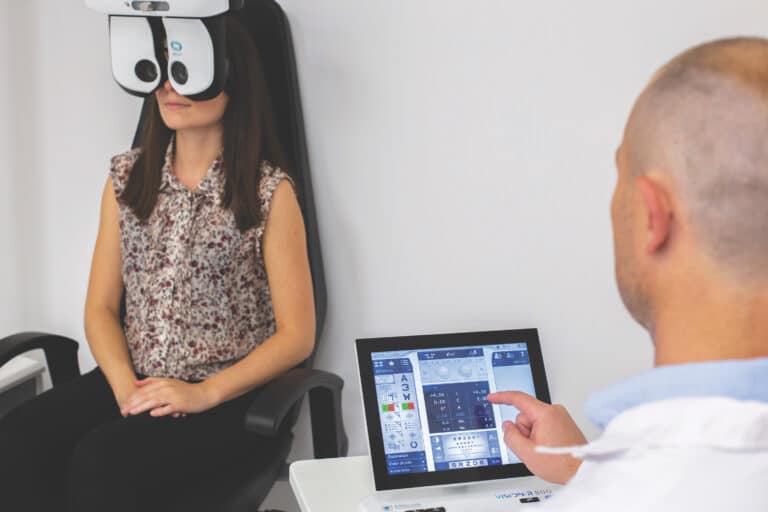
Essilor R800 eye test — the first step before vision therapy at Fantastic Glasses

Frequently Asked Questions About Vision Therapy

What is vision therapy?

A program of short daily eye exercises that trains how the two eyes work together: aiming at the same point (convergence), holding focus (accommodation) and moving accurately along a line of print (tracking). Glasses fix blur; vision therapy works on the skills glasses cannot fix.

Do I need a referral?

No. Start with the screening questionnaire and an up-to-date eye test. Our team scores the screening, measures how your eyes team and focus in store, and tells you whether a home program is worth trying or whether you should see an optometrist or physician first.

How long does a program take?

Programs run 6 to 12 weeks depending on the type, about 9 to 18 minutes a day, 5 days a week, with a short symptom check-in every week. At the end we re-measure and decide together whether to close the program, extend it or refer you on.

Can children do vision therapy?

Yes. Most programs suit children from about age 6 who can follow the instructions on a phone with a parent's help. The parent runs the phone and receives the reminders. Children under 6 should see an optometrist for a developmental assessment first. Eye tests are free for children under 19.

Can it help after a concussion?

Eye strain, headaches with screens, trouble keeping your place and dizziness in busy places are common after a concussion and usually improve. We run a gentle, seated, symptom-limited program for those symptoms. If a physician or optometrist is following your concussion, tell us so we can keep them in the loop.

What equipment do I need?

Your phone and a small kit we hand out in store: a Brock string, red-green glasses, lens flippers and printed charts, depending on your program. The exercises run in your phone's browser with timers, moving targets and counters, so there is nothing to install.

What does it cost?

The screening is free. The program and kit are priced separately from your eye test; ask us when you book or call (587) 997-3937. We provide itemized receipts you can send to your benefits plan.

Tired Eyes With Reading? Start With the Screening.

Five minutes online, then a quick visit to Unit 401, 235 Milligan Dr, Okotoks. Serving Okotoks, Calgary, High River and the foothills. Call (587) 997-3937 with any question.