2024-04-25
The Golf Sunglasses Debate
Golf has a complicated relationship with sunglasses. Some tour professionals wear them religiously. Others refuse, insisting that any tint throws off their depth perception and makes it harder to read greens. Both camps have a point, and understanding why helps you figure out whether sunglasses will help or hurt your game.
The pros who avoid sunglasses are usually concerned about two things: altered depth perception from tinted lenses, and frame edges intruding on their peripheral vision during the swing. These are legitimate issues with the wrong pair. But the solution is not to squint for four hours under the Alberta sun. The solution is to pick the right lenses and the right frame.
Why Lens Tint Matters on the Course
Golf is a game of reading surfaces. You need to see subtle elevation changes on greens, track a white ball against a blue sky, and judge distance across fairways. The lens tint you choose affects all of these tasks differently.
Amber and Copper: The Green-Reading Lenses
Amber and copper lenses enhance contrast between green and brown tones. On a putting green, this means the subtle undulations and grain direction become more visible. The slight colour differences between a ridge and a depression get amplified, giving you more information to work with when reading a putt.
This is the tint most golf-specific sunglasses use, and for good reason. It makes the landscape look slightly warmer, which most golfers find comfortable, while genuinely improving your ability to see the contour of the green. If you are only going to own one pair of golf sunglasses, amber or copper is the safe choice.
Rose and Pink: Maximum Contrast
Rose-tinted lenses push contrast even further than amber. The green of the grass and the white of the ball both pop more against a rose background. Some golfers love this effect and find it makes tracking the ball in flight noticeably easier. Others find the colour shift distracting and unnatural. This is genuinely a personal preference, and the only way to know is to try them.
Rose lenses also perform well in overcast and flat-light conditions, which we get plenty of during Alberta's spring and fall golf seasons. On a grey morning at the course, rose lenses can make the flat, washed-out landscape look considerably more defined.
Grey: True Colour for Purists
If you hate the idea of looking at the world through a colour filter, grey lenses reduce brightness without altering what you see. Greens look green. The sky looks blue. The ball looks white. No enhancement, no distortion. Some golfers, particularly those who have played for decades without sunglasses, find this the easiest transition because the world still looks normal, just dimmer.
The trade-off is that grey does not help you read greens the way amber does. It is purely a comfort and UV protection choice rather than a performance one.
Polarized: Yes or No for Golf?
This is where it gets interesting. Polarized lenses are fantastic for cutting glare on water, wet roads, and snow. On a golf course, they reduce glare from sand traps, ponds, and wet grass. But they also change how the green looks in subtle ways that bother some golfers.
Polarization can make it slightly harder to read some greens because it filters out certain reflected light that your eyes normally use to gauge surface texture. It is a minor effect, and most recreational golfers will never notice. But if you are a scratch player obsessing over every putt, it is worth trying polarized versus non-polarized on the practice green before committing.
For most weekend golfers, polarized is fine and the glare reduction benefits outweigh the theoretical green-reading trade-off. If you are genuinely concerned, many sport lens manufacturers offer non-polarized options in their golf-specific tints.
Frame Design: Wraparound vs. Standard
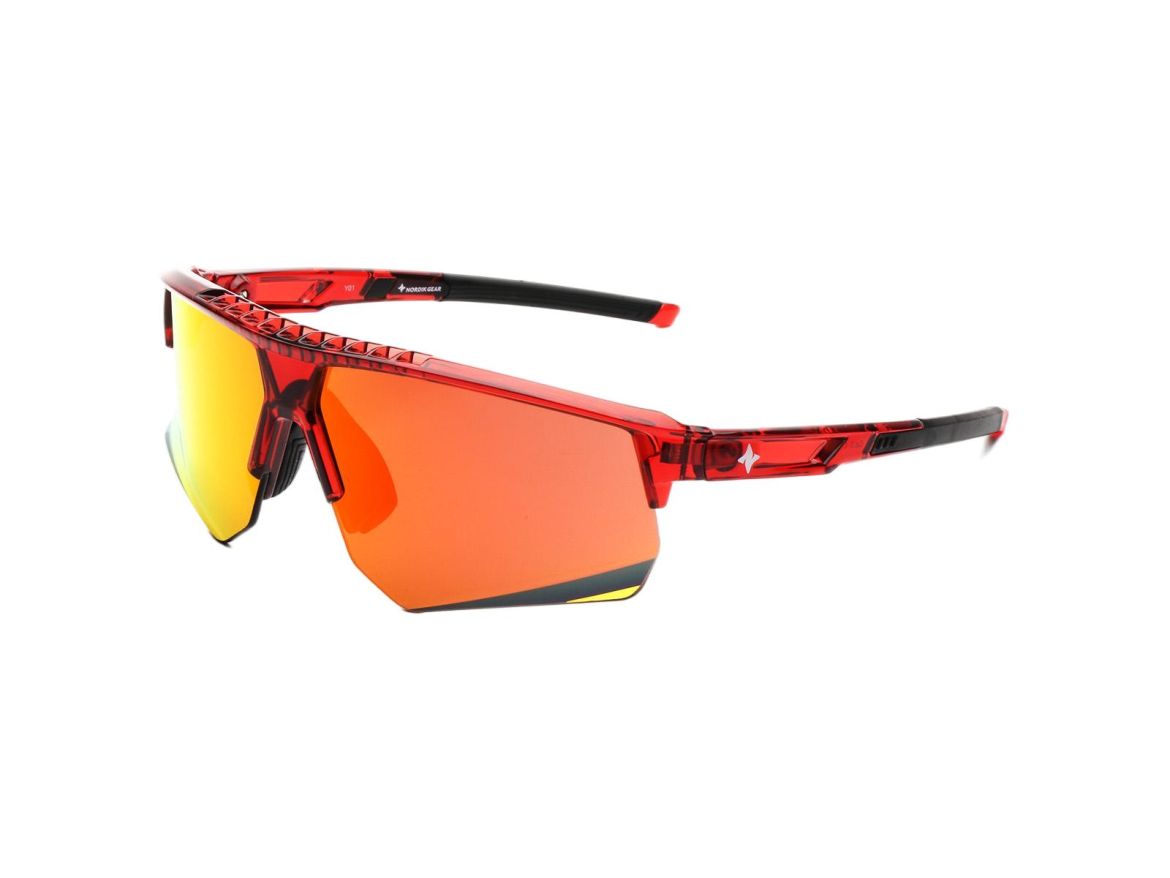
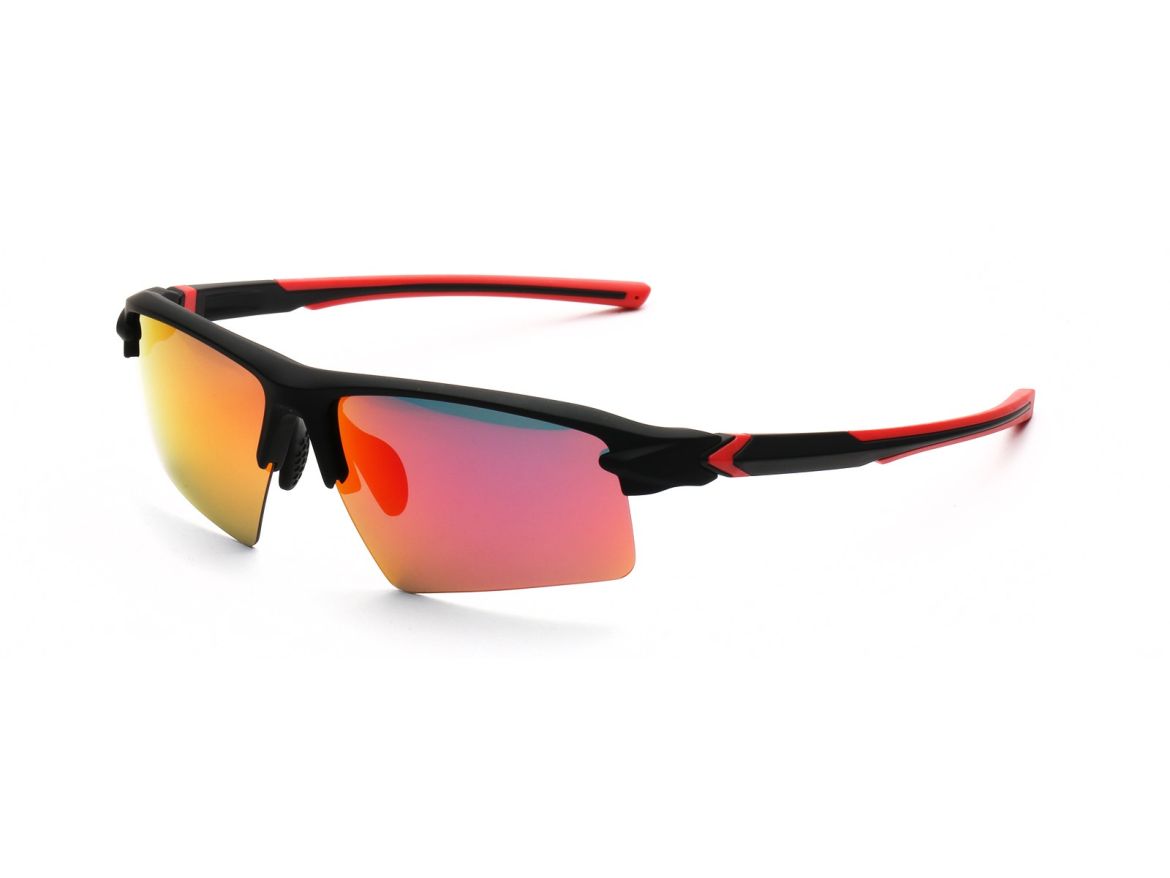
Full wraparound sport frames block peripheral light effectively and stay secure during the swing. But some golfers find the frame edge visible in their peripheral vision during address and backswing, which can be distracting. If this is you, a semi-rimless or standard frame with slightly curved lenses gives you most of the coverage without the visual intrusion.
The key frame features for golf are lightweight construction and a secure fit that does not shift when you look down at the ball. Rubber temple tips and adjustable nose pads help here. You want to forget you are wearing them entirely.
Temple Arm Thickness
Thick temple arms interfere with peripheral vision. For golf, thinner temples are better. You need full awareness of your surroundings during the swing, and a chunky arm blocking your side vision at address is a genuine distraction, not just an aesthetic preference.
Prescription Golf Sunglasses
If you need vision correction, golf is one of the sports where getting it right matters most. You are trying to read subtle slopes from 10 feet away, spot a ball in the rough at 200 yards, and read a yardage marker across the fairway. Wearing sunglasses that do not have your prescription, or worse, wearing no sun protection because you cannot see with regular sunglasses, is costing you strokes.
Prescription golf sunglasses with amber or copper tinted lenses will genuinely improve your game if you need correction. You see the green better, you track the ball better, and you stop squinting, which reduces fatigue over 18 holes. For progressive lens wearers, a single-vision distance pair dedicated to golf often works better than progressives, since you rarely need to read anything close up on the course.
Photochromic: A Smart Option for Variable Conditions
Alberta golf weather changes fast. A round can start under clouds and end in blazing sun. Photochromic lenses that darken and lighten automatically handle these transitions without needing to swap glasses. Modern photochromic technology in quality lenses adjusts quickly enough that you will not notice a lag between holes.
The caveat is that photochromic lenses do not get as dark as dedicated sunglasses in extreme brightness, and they do not go completely clear indoors. But for a sport where you move between shade and sun throughout a round, the convenience is hard to beat.
Practical Recommendations
- Best all-around golf tint: Amber or copper, polarized or non-polarized depending on your putting sensitivity
- Best for overcast rounds: Rose or pink tint for maximum contrast in flat light
- Best for comfort purists: Grey polarized for true colour and glare reduction
- Best for variable weather: Photochromic in an amber base tint
- Frame style: Semi-rimless or low-profile wraparound with thin temples
The Short Version
Golf sunglasses should enhance contrast on greens, fit securely without intruding on your vision, and protect your eyes across a four-plus hour round. Amber tints help you read greens. Lightweight frames with thin temples stay out of your way. And if you need a prescription, getting it built into a proper golf lens is one of the best equipment investments you can make for your game. Come in and we will set you up with the right combination for how and where you play.